LIVEOAK TECHNOLOGIES
Video Conferencing Design
My Role
Project Lead / Senior UX Designer in a team of three
Client Team
Co-founder / Head of Product, Engineering team
Duration
8 months
Scope
Information Architecture, Visual Design, Prototype
The Big Win
LiveOak was acquired by DocuSign in 2020 because of the Online Notarization flow that my team created.
Liveoak Technologies was an enterprise software startup that provided secure video conferencing and document collaboration to banks and insurance companies.
The Interesting Bits…
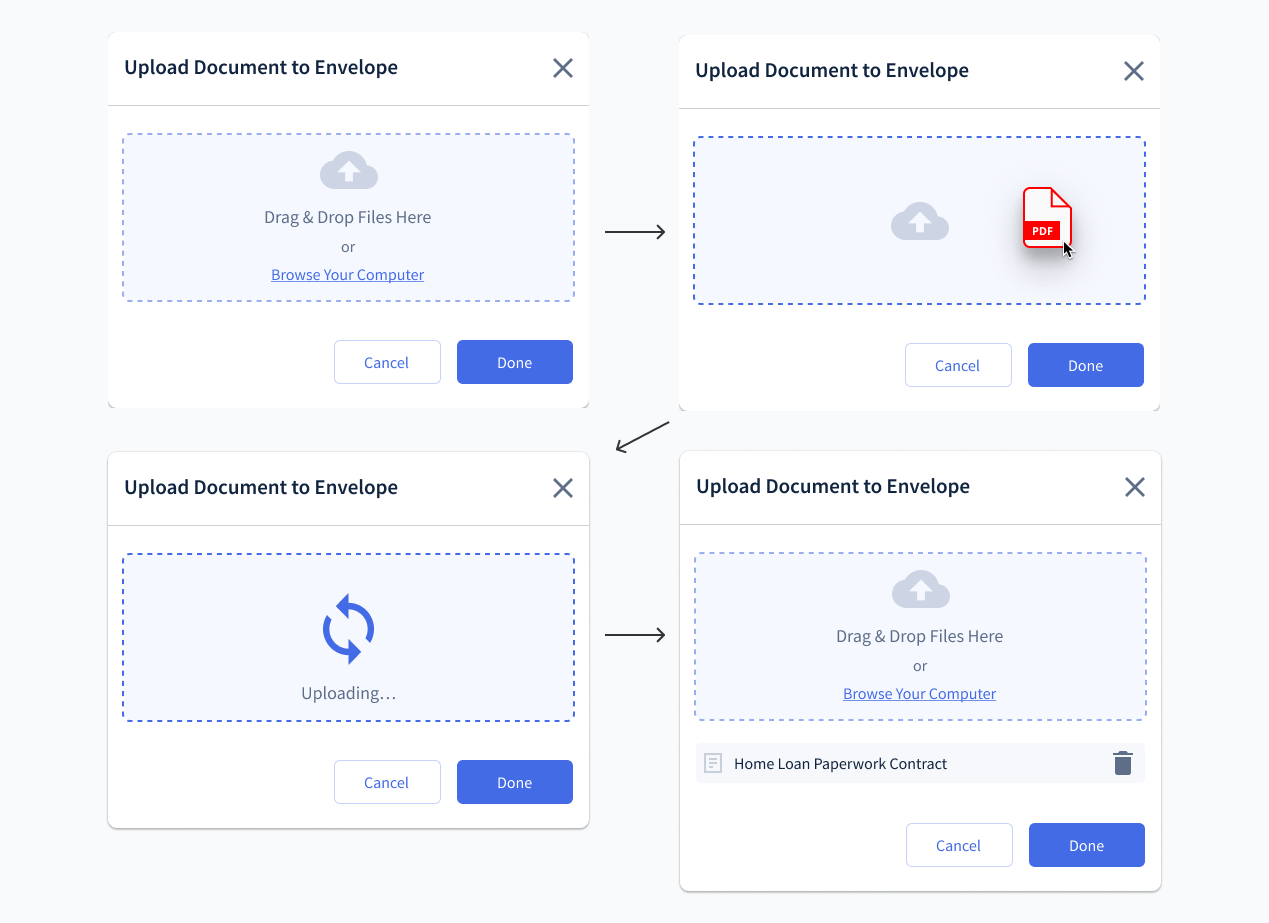
Interaction Design was the main focus
At the beginning of our partnership, LiveOak wanted to focus on integrating new and improving upon existing interactions. I was able to get right to work by using their existing components and updating or creating new ones, while keeping the focus on the interactive pathing. The first few rounds of projects focused on smaller interactions, like action confirmations, rate cards, and calendar selections. Interaction projects eventually grew bigger into refining conference room flows and creating the complex, online notarization workflow..
Once we started on the large project Online Notarization flow, our focus narrowed to microinteractions like hover states, open and closed states, and minimum to maximum participant views.
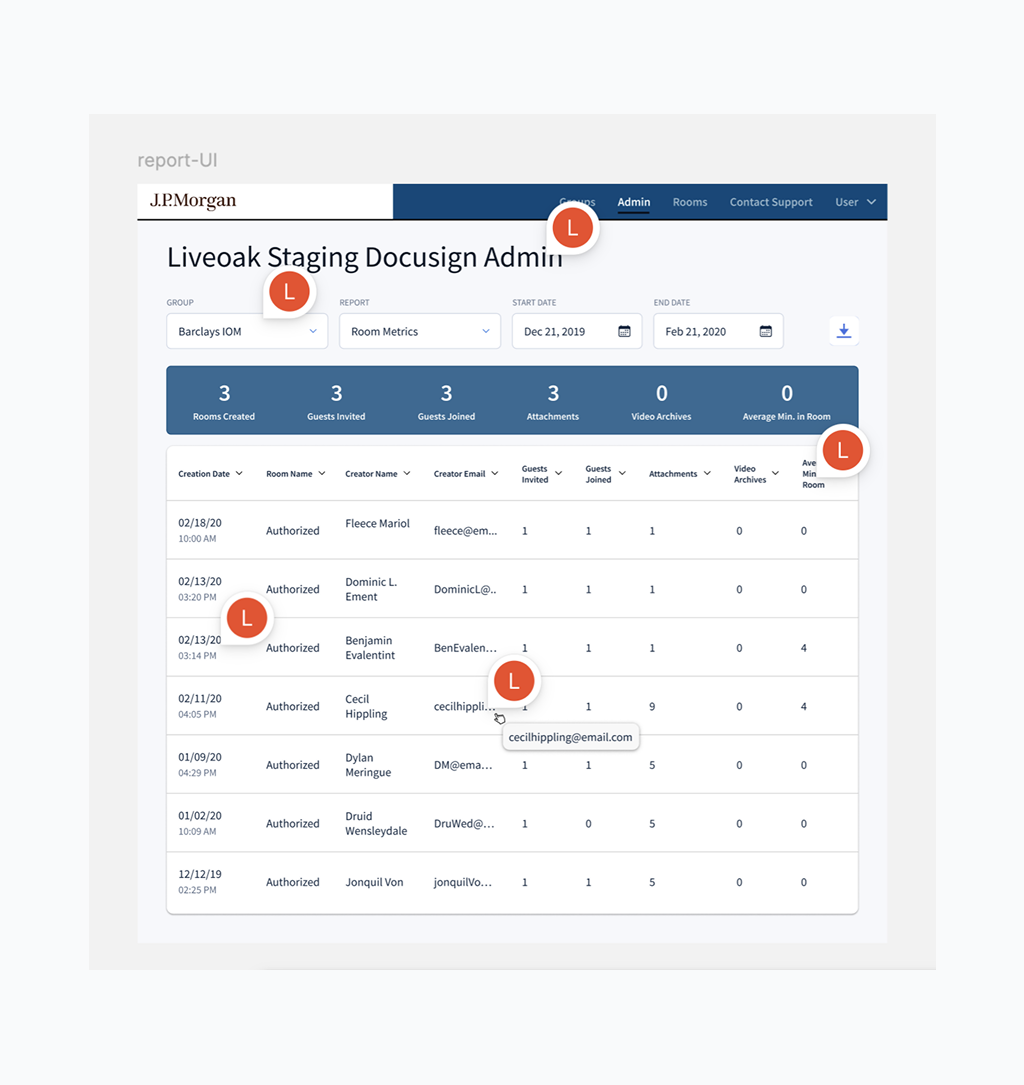
I insisted on adding more people to my design team to keep up momentum
As time went on, the manager rolled off the project and I was the only person working directly with the team. The needs of the client grew to the point where I had to handle 3-4 different medium to large interaction design projects at once. I recognized the need for help and convinced my manager to let me add more designers to my team so that we could deliver on time.
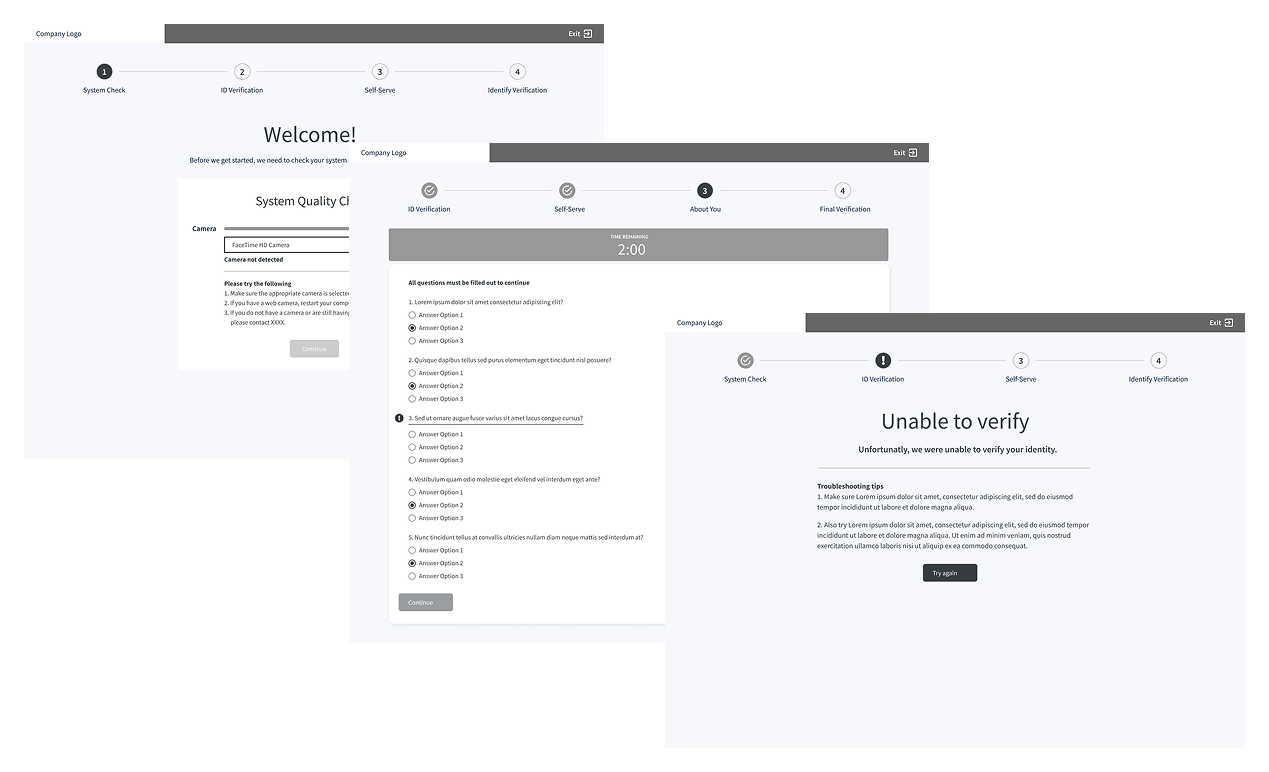
Online Notarization was a complex workflow that my team made easy to use
This was a complex workflow that was comprised of smaller flows, interactions, and states that were essential to its functionality. Flows included ID verification, signing documents, and agent post-meeting tasks. Some of the key interactions we designed were user troubleshooting options during the conference, user settings, chat, and document preview. Aside from the default, the states we designed for were error, load, and confirmation. We also had to take into account the scalability and the view on mobile and desktop for both types of users.
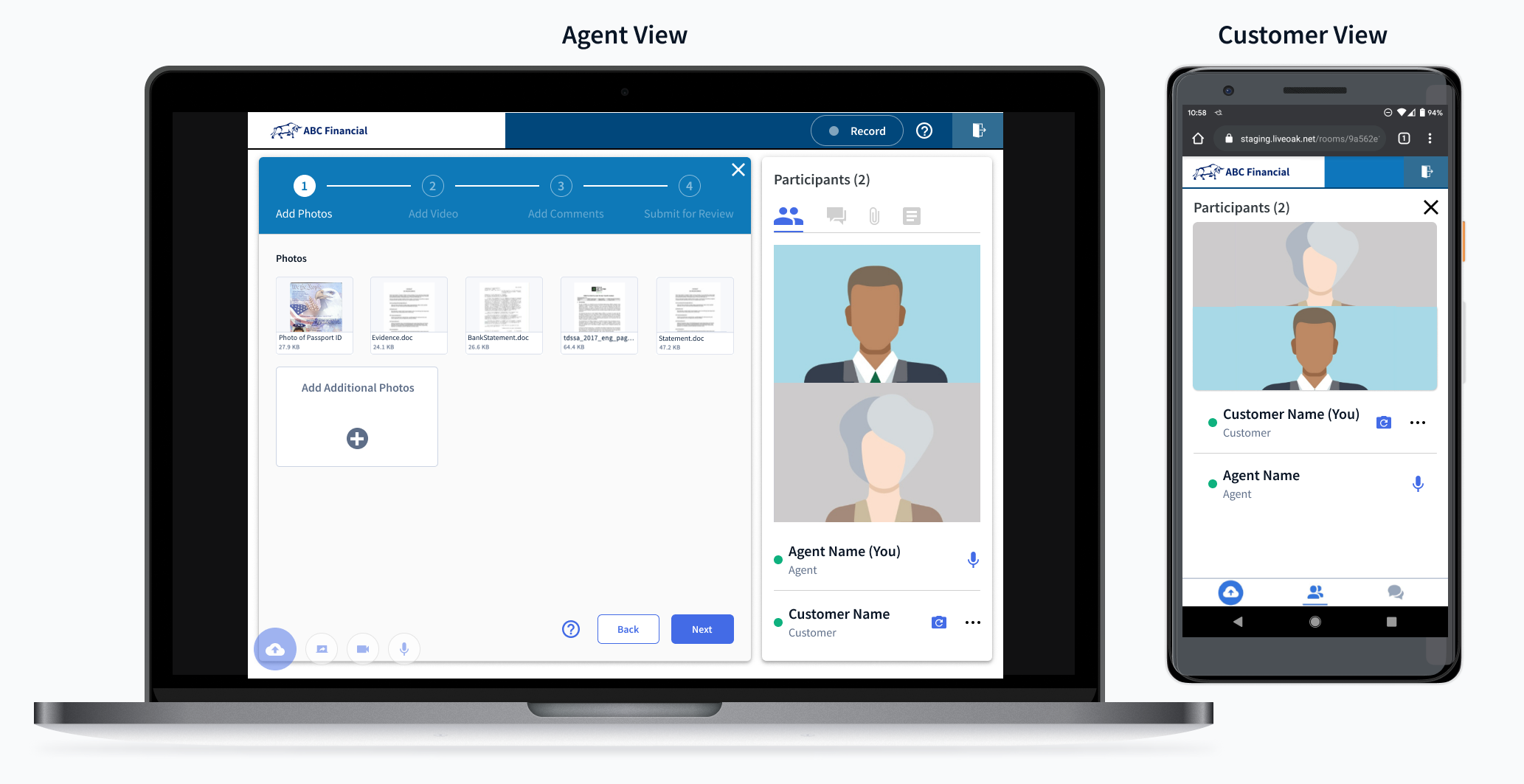
Designing the same flow for two different users
We had a lot to think through and design to make the Online Notarization flow easy to use for both the agent and the participant. Though some of their paths were the same, there were specific capabilities that were unique to the agent. My team started with user flows for each user type that included all possible outcomes. We worked with the client team to prioritize which parts of the flow we would tackle first. We moved on to high-fidelity wireframes to establish interactions and touchpoints, then translated them into visual design. Scalability and desktop and mobile views were also a big part of the project.
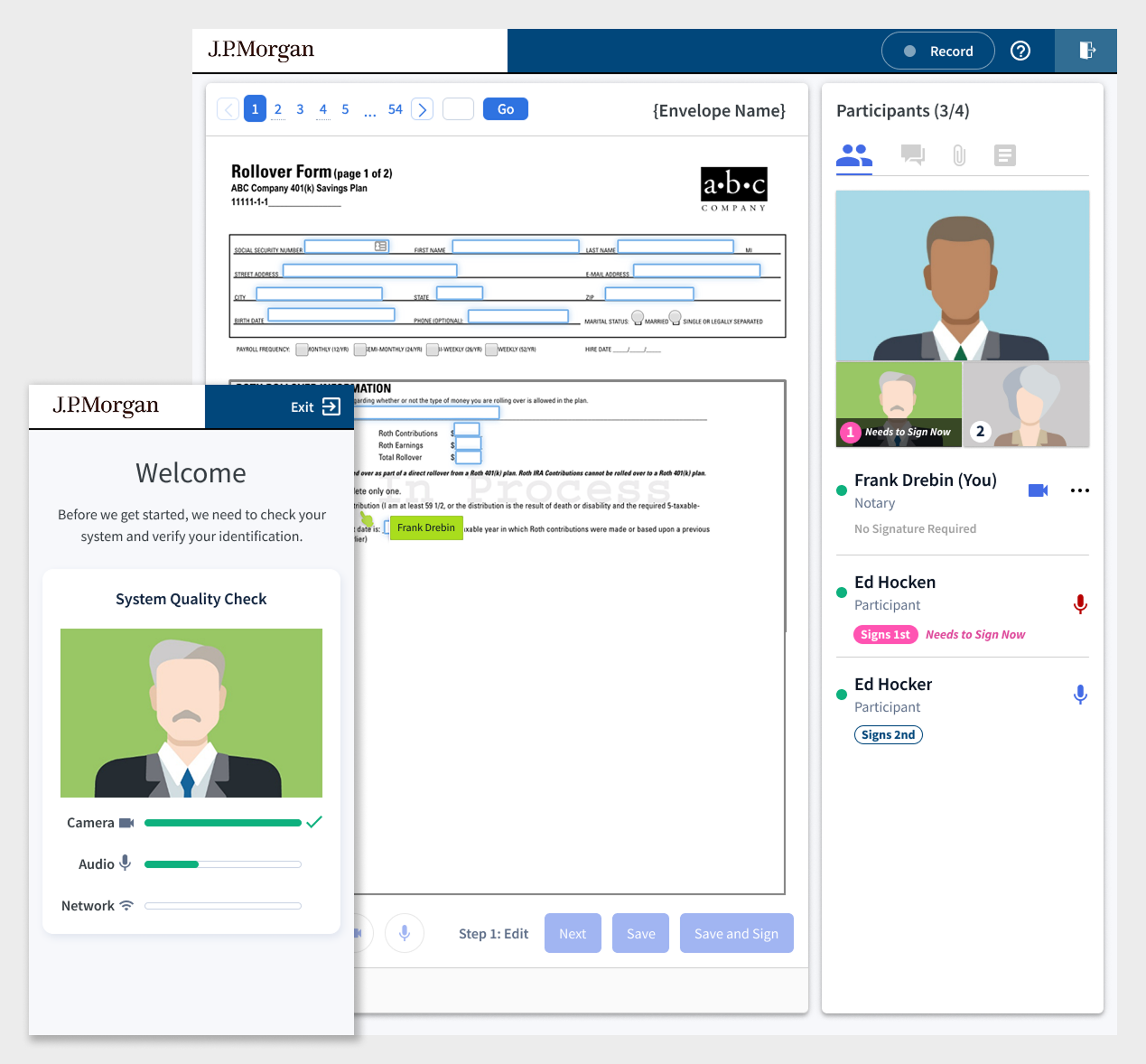
I managed a revolving team of designers and kept everyone on task
Onboarding internal team members and delegating work became essential to getting everything done. Because of the company’s heavy workload at the time, help was based on availability, which resulted in having to onboard new designers nearly every week.
To make onboarding go smoothly, I created a concisely detailed document that included the objective and supporting details for each in progress project, links to the files and component library, important deadlines, and designer assignments. I communicated with my team via Slack and set up Zoom and offline internal reviews so that we could move quickly and efficiently.
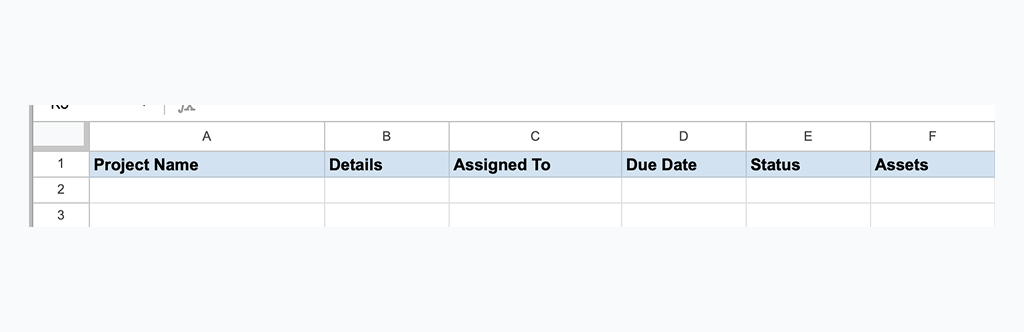
To work effectively, I broke large projects into manageable design tasks, creating an efficient work flow
To keep track of who was doing what, I set up a spreadsheet that listed the flows and notable areas within them. I delegated the pieces to internal teammates so we could work on different parts simultaneously. The document helped me manage the designs, create transparency across the team, and set clear expectations around duty and deadlines. Outside of internal reviews, we met remotely one-two times a week with the client to review our work, get live feedback, and ask questions with the expectation that we’d iterate on the flow for the next meeting.
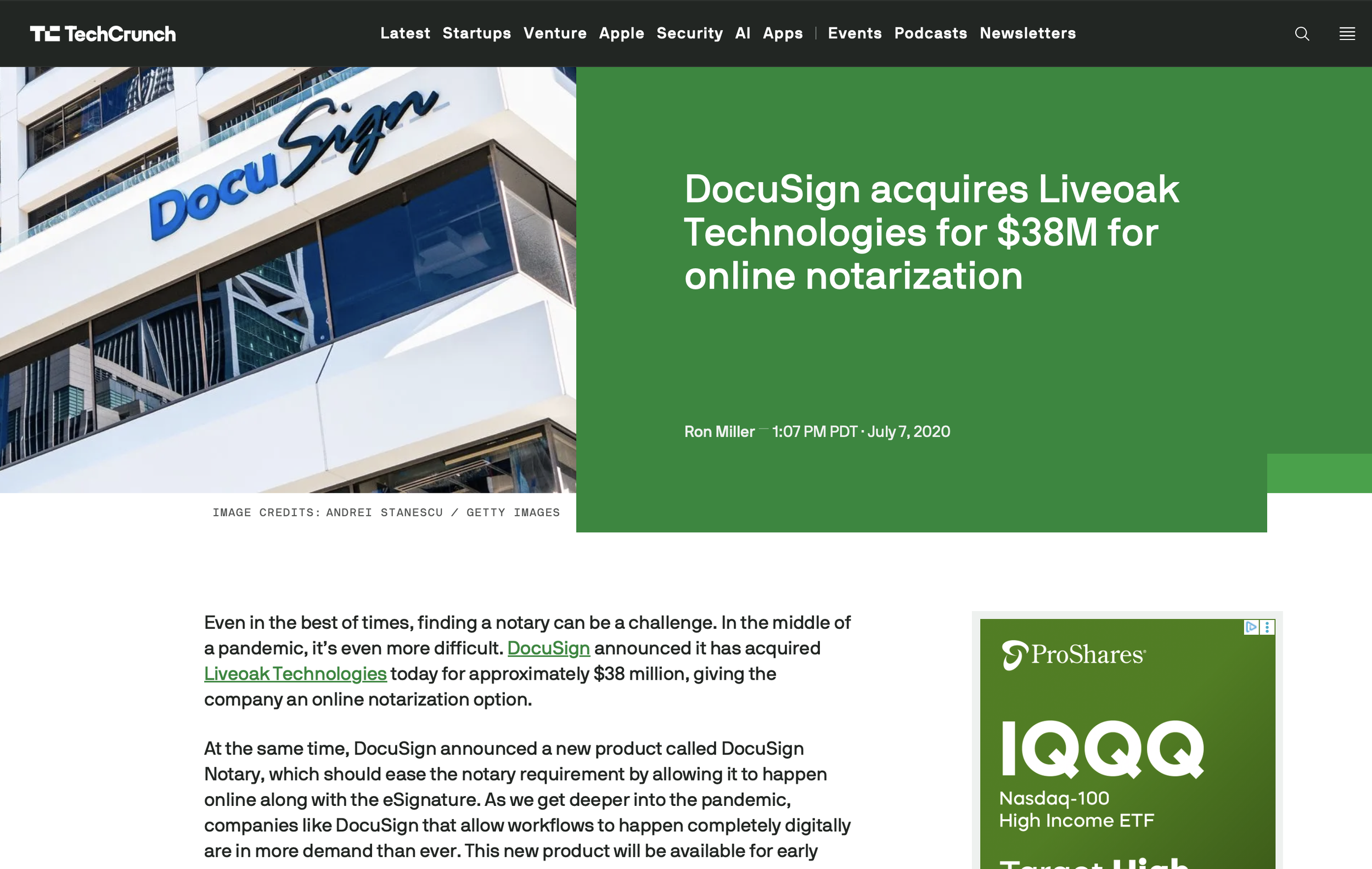
The Online Notarization workflow led to LiveOak being acquired by DocuSign
My team created the Online Notarization flow from scratch. It was a large project that was comprised of several user flows and lots of details. My efficient project management techniques, the detail oriented nature of my team, the consistent communication, and productive iteration processes led to LiveOak being acquired by DocuSign for $38M in July 2020.
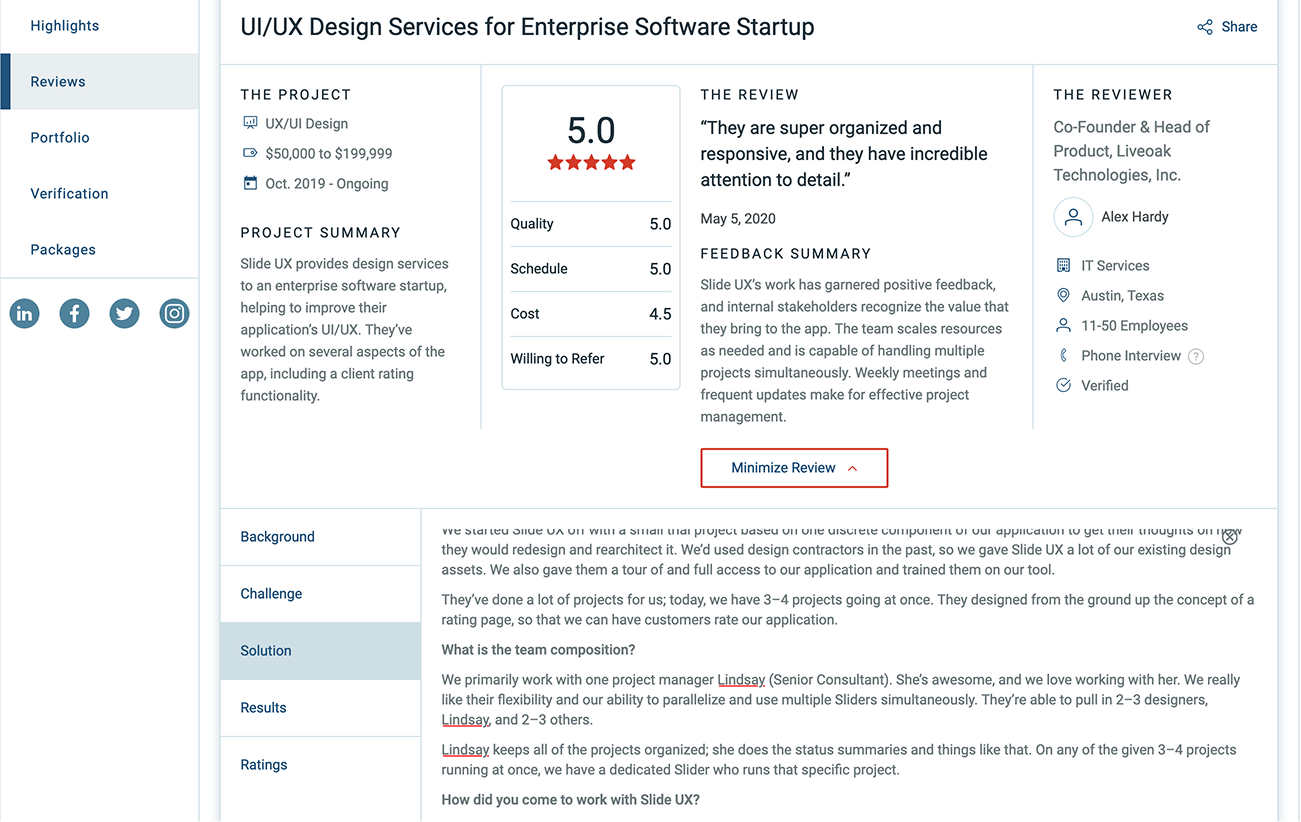
A Real Client Review
Want to know more?
Contact me at linwincreative@gmail.com